Patient Information

It’s National Smile Month…

It’s National Smile Month, a month-long campaign designed to create more public awareness about oral health. Smile Essential Dental Practice in Leicester along with thousands of other individuals and organisations

The campaign aims to promote 3 key messages:

• Brush your teeth last thing at night and on at least one other occasion with a fluoride toothpaste.

• Cut down on how often you have sugary foods and drinks.

• Visit your dentist regularly, as often as they recommend.

National Smile Month isn’t just about education and stressing the importance of a healthy mouth. The key to the success of the campaign is that we have lots fun whilst doing it!

By taking part in National Smile Month Smile Essential, are helping to create a healthier, happier and smilier world. The campaign channels positivity and promotes the true value of a smile, not only for its benefits towards physical health but mental wellbeing too.

Our teeth have such an important role to play in our lives. They help us chew and digest food, they help us to talk and speak clearly and they also give our face its shape. A smile also has other day-to-day benefits. It can give us greater confidence, as well as influence our social lives, careers and relationships.

National Smile Month is our chance for us to take a fresh look at our current oral health and make any necessary changes required.

Over the recent years, more evidence has been gathered suggesting that poor oral health also puts you at an increased risk of heart attacks, strokes, dementia and complications during pregnancy.

The best way to maintain great oral health is to:

• Brush twice daily with a fluoride toothpaste

• Clean in-between your teeth once daily with floss or interdental brushes

• Visit your dentist regularly

• Chew sugar-free gum after eating or drinking, especially sugary foods, to help protect your teeth and gums in between meals.

• Wait an hour after eating or drinking anything before brushing as then enamel will be softened and you could be brushing away tiny particles.

• Avoid snacking and try to only have sugary foods and drinks at mealtimes, reducing the time your teeth come under attack.

If you are concerned about your dental health then drop our friendly team an email here…

Dental Leicester

Is flossing really essential…

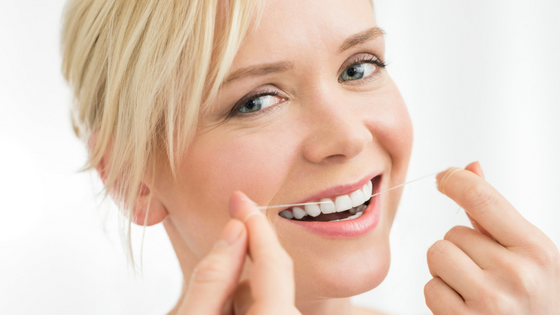
Despite ongoing press attention that there isn’t any evidence, that flossing significantly improves gum health, we strongly advise you to continue to floss! One of the key points in the media is that there is no evidence. This is because there haven’t been any significant studies!

However, we in the dental profession witness on a daily basis the difference flossing or any form of interdental cleaning in a person’s oral health.

Proper flossing removes plaque and food particles in places where a toothbrush cannot easily reach like under the gum line and in-between your teeth. Not flossing is thought to be the equivalent of not brushing your teeth for 2 full days a week! It’s important because plaque buildup can lead to tooth decay and gum disease, daily flossing or interdental cleaning is highly recommended if you want to keep your teeth for the rest of your life.

How to floss?

Starting with about half a metre of floss, wind most of the floss around each middle finger, leaving about 3-4cm to work with Holding the floss tautly between your thumbs and index fingers, slide it gently up-and-down between your teeth Gently curve the floss around the base of each tooth making a C shape, making sure you go beneath the gum line. Never force the floss, as this may cut or bruise delicate gum tissue, after each tooth roll the dirty floss on to the finger and move on to the next tooth using a clean section of floss. Continue to do this as you move from tooth to tooth until you have done all of the teeth. It’s quite likely that your gums may bleed during the early stages of flossing. Don’t let this deter you! This is a sign that you should definitely floss and any bleeding should resolve after 3-4 days.

If you find flossing too fiddly or suffer a medical condition such as Parkinson’s or arthritis you may find flossing just too tricky. However, this shouldn’t deter you from seeking alternative ways to clean in between your teeth.

There are many alternatives to flossing such as interdental brushes such as Tepes, floss sticks and AirFloss. It’s always best to seek tailored advice on your oral health from a dental professional.

Find out more about our dental hygiene services…

Dental Leicester

About Teeth Whitening…

Teeth whitening is a popular cosmetic treatment at our Leicester dental practice. Whitening provides a fantastic way to improve the cosmetics of your smile. We all love a bright healthy looking white smile.

It’s often a better option than alternatives to improve appearance and colour, such as veneers, because it doesn’t involve permanently altering the tooth’s structure and it’s easy to look after. Whitening offers a way to safely improve the look of your teeth as whitening won’t remove the surface of your teeth or change their shape.

Some people dream of a bright white Hollywood smile and others just want their teeth to look naturally brighter. We offer two teeth whitening treatments at our Leicester dental surgery – Enlighten Ultimate and Enlighten Home. Both our home tooth whitening treatments.

Our Enlighten Ultimate teeth whitening guarantees your teeth will reach the lightest natural colour on our tooth shade guide. With Enlighten Ultimate teeth whitening you’re guaranteed to lighten your teeth by up to 16 shades – no other system does that in the world! It combines home teeth whitening and in surgery laser whitening.

If you only wanted to lighten your shade by a few shades for a natural look or your teeth aren’t too dark then you could opt for our Enlighten Home teeth whitening. It still uses the fantastic whitening gels and trays but it doesn’t come with the laser teeth whitening at the end of treatment which guarantees the lightest shade.

Teeth whitening at our Leicester clinic generally requires around three appointments:

Appointment one: a free consultation to have a chat about your tooth whitening goals and that you are suitable. If you’re happy then we can take the impressions at this stage to make your uniquely designed tooth whitening trays.

Appointment two: is when the uniquely designed tooth whitening trays are fitted and then you start to whiten your teeth from home each evening for the next 2 weeks.

Appointment three: is a review of the tooth whitening and your results. We will also perform in-surgery laser tooth whitening. This appointment is very straightforward, wearing your custom made teeth whitening trays and a special high concentration gel you can relax and watch a DVD for an hour.

Ready to get Enlightened? Arrange your free consultation here…

Dental Leicester

Dental Membership Plan Offers a Real Saving…

We understand the struggles many of our patients face when trying to seek dental care. That’s why we have created a dental membership plan – Smile Plan, which caters to these needs.

The 3 key areas that we felt were important to our patients:

Priority appointments – early morning and late evening appointments are often the most popular. These appointment times are prioritised for our membership patients.

Affordable inclusive cover – our dentist’s focus is on preventative dentistry. Our membership allows you to attend for your regular dental appointments for only £12.99 per month. Attending regularly means your dentist can spot any concerns before they have a chance to develop into something more serious. We wanted our plan to cover all of your regular dental health care such as your oral health check-up, X-rays and routine six-monthly dental cleaning – scale and polish.

Discount – sometimes treatment is required or even desired. Dental treatment may be necessary in order restore your smile back to health. Or maybe you want something to make your teeth look nicer and a smile you can really feel great about. If this happens we want to help our dental plan members by offering a 15% discount on most of our dental treatments.

Here’s an overview of everything that is included in your dental membership at our Leicester clinic:

• Six monthly dental health checks. This includes a mouth cancer screening, all necessary x rays and photographs.
• Six monthly hygiene appointments. These appointments with the dentist/hygienist include a thorough assessment of your gum health, fresh breath treatment, techniques to prevent gum disease, periodontal advice, and most of all, the thorough removal of built-up plaque that causes decay and a polish that refreshes your smile.
• 15% discount on most dental work you may require – including most cosmetic treatments.
• 12-month guarantee on all restorative work (provided due care has been taken).
• Priority appointments for your convenience.
• Same day assessment of dental emergencies and dental pain, when the practice is open.
• Dispensing of most antibiotics.
• Same day assessment of dental emergencies and dental pain.
• Eligibility to request assistance from the Worldwide Dental Emergency Assistance Scheme.

*Please see your individual practice plan term and conditions to see what exactly is covered.

At Smile Essential dental practice in Leicester, our mission is to provide patients with the best quality dental care and service. To inquire about joining our dental practice click here to get in touch…

Dental Leicester

Here’s what you need to know about cosmetic braces….

Many people have spent years disliking the alignment of their teeth but never looked into treatment because they think it will be too expensive, too unsightly or just too much hassle!

However, the truth is that with modern advancements it’s quite straightforward! At our Leicester dental clinic, we concentrate on changing the alignment of the teeth people are generally most concerned with – the front ones. This means that treatment is now easier, less expensive and faster than ever before.

Dental practices like Smile Essential in Leicester can give you that smile you’ve always wanted.

How does it work?

Cosmetic braces such as Six Month Smiles or ClearSmile still use fixed brackets like traditional orthodontic treatments but they are tooth coloured and not metal so are more cosmetically pleasing. They also work in the same way as traditional braces – exerting gentle pressure to move your teeth. They act much more quickly than traditional braces because they focus on only moving the teeth visible in your smile line.

How long does it take?

Treatment takes anywhere from 4 to 9 months, but most people complete treatment in just 6 months. With conventional braces the average treatment is between 18 months and 2 years, this is what makes cosmetic braces systems such as ClearSmile and Six Month Smiles such a popular choice for adults. Once you have been in for your consultation the dentist will be able to give you an idea of how long they expect the treatment to take.

How much does it cost and what’s included?

We provide a complete cosmetic brace package this means no surprise costs at a later date! Included with your cosmetic brace package is our dual retention system – without this, your teeth are likely to move back! We also provide FREE tooth whitening to finish your new look. The investment for straight teeth is 2,700. Many patients choose to take advantage of our flexible finance options.

We offer a range of finance options so you can spread the cost of treatment for peace of mind. Our most popular finance option is our 12 months 0% interest offer. If you would like to repay over a longer amount of time we also offer finance at a competitive 9.9APR from 24 up to 60 months. You can calculate what to borrow and the monthly costs on our handy finance calculator.

Interested in taking the next step at our Leicester dental clinic?

The next step we recommend is for you to come and see us for a complimentary dental consultation at our Leicester dental practice. It’s FREE and is just to have a chat with the dentist to discuss your concerns and check the treatment is suitable for you. If you and the dentist are both happy then the next step is to book in for a full orthodontic assessment appointment to start your journey to a healthy, straight and confident smile.

Get in touch…

Dental Leicester


Why do dentists take X-rays? 

It’s likely that if you have been attending a dental practice regularly then you will have had x-rays (also known as radiographs) taken. But do you know why the dentist takes x-rays? 

X-rays are an essential part of any dental care treatment plan. They allow the dentist to see areas they otherwise would not be able to examine with the naked eye. Having x-rays taken at your dental health check allows your dentists to diagnose potential dental issues before they become a larger issue. 

These are the main reasons your dentist takes x-rays: 

  • Look for early stages of tooth decay 
  • Look underneath any restorations such as fillings or crowns for any tooth decay
  • Look at the health of tooth roots
  • Check the health of the bone levels around your teeth
  • Determine if periodontal disease is an oral care issue
  • To help diagnose which treatment is required

There are two main types of x-rays we use at Smile Essential Dental Practice in Leicester. These are called Bitewings and Periapicals. Both of these types of x-rays deliver a relatively low dose of radiation. 

Bitewing x-rays are called bitewings because you bite down on a wing-shaped device to hold the x-ray film in place. They are used to capture an image of both the upper and lower molar and premolar teeth. 

Bitewings can reveal cavities in between the teeth and underneath previous dental work, an area that dentists can’t visually inspect. Often at this early stage of decay, there may only be mild symptoms such as sweet or cold sensitivity. However, if left untreated the decay would advance. By the time it is visible to the naked eye or causes noticeable discomfort, more extensive work such as a root canal may be required. “ 

Bitewings are also useful for helping to diagnose periodontal disease and monitoring the bone levels around the teeth. Your dentist will compare x-rays he has taken over the years to see if there have been any significant changes. 

Periapical x-rays capture images of two or three teeth down to the root. They can reveal an abscess caused by an infection or root caries, which are lesions at the bottom of the tooth.  

If you’re a new patient and are looking at getting brace treatment or have extensive dental work already then it’s likely you may need a full mouth series of x-rays, which may involve both bitewings and periapical x-rays of the teeth. 

 How often should you have dental X-rays? 

This depends, children and adults that are at greater risk of tooth decay may require follow up x-rays 6 months later. If you are at low risk then the dentist will take more than likely just take two bitewing x-rays every 2-3 years. 

Remember if you’re at all concerned about having x-rays taken then discuss this with your dentist. They are always happy to discuss and advise. 

 Dental Leicester

Why Dental Checkups Are Essential…

Ever wondered why the dental receptionist is so insistent on booking in your next dental appointment before you leave? It’s because they are vital to keeping your mouth healthy.

Regular dentist checkups or as we call them here at Smile Essential Dental Practice in Leicester – Dental Health Checks, are essential for spotting problems early.

If you leave without arranging your next dental appointment then you will often go over the advised interval your dentist has recommended an appointment. Sometimes 6 months turns into a year and before you know it your mouth will start to feel unhealthy.

At your check-up appointment, the dentist is looking at a lot more than just teeth! They will be carrying out a full oral health exam.

There are 10 points we review at your Dental Health Check:

1) Your awareness of the health of your mouth
2) The health of your teeth
3) The health, stability and appearance of any restorations (eg fillings, crowns)
4) The health of your gums
5) The health of the bones supporting your teeth
6) Plaque control and home care regime
7) The comfort and health of your bite (how teeth meet together)
8) Signs of tooth wear/grinding or clenching
9) The health of your jaw joint
10) Mouth cancer check

Often the dentist will also be keeping a close eye on any areas they are particularly concerned about and will want to regularly review it. This is one of the reasons it’s advisable to attend the same dental practice and not chop and change.

Attending regularly for you Dental Health Check is one of the best things you can do to prevent dental problems and avoid unnecessary dental treatment.

Once our checks are complete we also discuss our findings with our patients and help you to develop a personalised oral healthcare regime individually tailored to your needs.

Our goal is to help you keep your teeth and gums in the best possible condition.

Need to arrange your dental appointment at our Leicester based clinic? Give us a call on 0116 2891317

Dental Leicester

7 tips for kissable breath this Valentine’s day…

1. This one’s pretty obvious but it’s the most important thing you can do – brush your teeth! This is also a great time to either buy a new toothbrush or invest a decent electric one. Whilst giving your teeth a good brush don’t forget that tongue! Sometimes there are really smelly bacteria on there that can cause bad breath. One study found that by brushing the tongue, volunteers reduced their perception of bad breath by 70%!

2. Okay, this is sort of a gross suggestion but have you ever smelled your floss after flossing? If yes then you know what we mean! If no – try it! Bits of food can lay hidden between the teeth just rotting away if you haven’t been flossing.

3. A good old swish around with a mouthwash just before you leave to go on a date is a good idea. An antibacterial mouthwash will help to kill off any nasty bacteria and giving you a fresh minty zing.

4. Drink plenty of water to prevent your mouth from getting dry. A dry mouth can be a cause for bad breath and also unpleasant to kiss!

5. Steer clear of the onion and garlic. Some foods though can actually help your breath to stay fresh such as apples, mint, celery and parsley.

6. Chew gum. Chewing gum will help with bad breath because the chewing action results in more saliva being produced which in turn cleanses the mouth. Xylitol chewing gum such a Peppersmiths also help to strengthen teeth and come in lemon and mint varieties.

7. Quit smoking? smoking never smells good whether it’s on your clothes, hair or breath. Tobacco tends to dry out your mouth and can leave an unpleasant smell that lingers even after brushing your teeth.

Still, have bad breath? Then it’s worth scheduling an appointment with your dentist. Your teeth may require a simple hygiene appointment or sometimes causes could be medical related. Either way, your dentist can help.

Dental Leicester

3 quick switches to improve your dental routine…

Whether you’re a top flosser or are simply looking to maximise effectiveness when it comes to cleaning those gnashers, you’ll love our three quick switches to dramatically improve your cleaning routine.

Quick Switch One

Swap your manual toothbrush for an electric toothbrush. We love, use and recommend the Philips Sonicare.

When using a manual toothbrush it’s tempting to scrub the teeth in order to give them a really good clean or when you’re in a rush. This can lead to gum abrasion. People also tend to clean the same areas of the mouth with a manual toothbrush and as a result, tend to miss the same areas of the mouth over and over again.

Using an electric toothbrush is absolutely the most effective way of removing plaque and debris. The Philips Sonicare electric toothbrush was the first toothbrush on the market to harness the power of sonic technology and is still leading the way. It provides a deep clean for your teeth and even helps to make them whiter.

Quick Switch Two

If flossing is too fiddly or time-consuming for you then you might want to switch to interdental cleaning brushes such as Tepes.

These little brushes are extremely effective at removing soft plaque deposits and food debris from between the teeth. Most of our patients that try them love how quick and easy to use they are.

It’s important to use the right size. Tepe brushes should fit snuggly between the teeth but not so much that they get stuck or are difficult to pull out. Either your dentist or hygienist will happily advise on the right size for you and give you one to try at home for a few days.

Quick Switch Three

Don’t use a mouthwash after you have cleaned your teeth. Whilst it can seem like the perfect end to cleaning routine and a splish splosh around the mouth may be invigorating we advise you against it. Why? One of the main benefits of toothpaste is fluoride. Fluoride helps to strengthen the teeth and limit your risk of tooth decay. When you finish brushing your teeth the advice is to spit and not rinse the toothpaste out. This way the toothpaste can stay on the teeth and do its job.

And yes even if there’s fluoride in your mouthwash it will be a weaker strength than your toothpaste.

The best time to use a mouthwash is in between brushes probably sometime in the middle of the day.

Need a checkup? Check out our 10-point dental health check…

Dental Leicester

The 5 Consequences Thumb Sucking…

If your dentist/mother-in-law/friend (delete as necessary) has been getting on at you about your little one sucking their thumb it may just be for good reason.

Thumb sucking is a common habit that generally affects infants and children. It’s reported that up to 90% of children will dabble in thumb sucking at some point between the ages of 2 and 4 years old.  Most children stop sucking their thumb by 2 and 1/2 years of age, and thumb-sucking is often considered okay until age 3.

Children suck their thumbs because it’s comforting and calming. They turn to their thumb when they’re tired, scared, bored, sick, or trying to adjust to challenges such as starting nursery or preschool.

Long-term effects of thumb sucking occur when a child’s thumb sucking continues when their adult teeth start to come through. This usually happens around the age of 5-6 years old. It would be wise to try and break this habit by then.

The 5 consequences of thumb sucking

1) Teeth being pushed around, which might cause an overbite or an underbite to form. This can affect the way the face looks and how the teeth meet together.

2) Germs from your thumb and surrounding areas affecting your body. Frequent hand washing and keeping the nails short will help to minimise this risk.

3) The roof of the mouth becoming altered or more sensitive.

4) A lisp being formed because constant thumb sucking can affect the jaw bone positioning.

5) Skin Problems. When exposed to the moisture and enzymes found in the mouth, the skin can become vulnerable. In some cases, the skin may crack or bleed especially around the nail. This can make your child’s hands vulnerable to infection.

When trying to break the habit of thumb or finger sucking it’s important to be extra gentle with your child. As thumb sucking is often a comforter you don’t want to stress your little one as this may result in even more thumb sucking.

Our tips are:

• Teach your child the reasons why they can’t continue to suck their thumbs. Explain to them the long-term effects of such a habit and what that might entail.

• Observe and try to eliminate triggers that cause them to thumb suck.

• When your child sucks their thumb, distract them with a toy or a song.

• Ensure you give plenty of praise and perhaps track your child’s progress using a reward chart.

• Get your dentist to help! They can offer you support, guidance and possibly some handy tips!

• Try a thumb sucking aid. We have had patients report success when using a thumbsucking aid such as a Thumbsie.

If you’re at all concerned about any aspect of your child’s dental health than seek advice from your dentist.

Dental Leicester