Patient Information

7 Surprisingly High Sugar Sources…

Smoothies

Often fruit smoothies are seen as a healthy drink or snack. But these innocent looking drinks are actually loaded with free sugars. Once the fruit is blended the natural sugars are released from within the cell walls of the fruit and become ‘free sugars’. Any added sugar is also counted as free sugars. 

Tomato ketchup

The tabletop condiment of choice for many us and sadly one of the kiddies favourites. Tomato ketchup has a surprisingly high concentration of sugar. But a tablespoon of tomato sauce equals one teaspoon of sugar! So take it easy with the sauce and limit children’s consumption.

Yoghurt

The BBC reported on a Leeds University study of almost 900 yoghurts – with some containing more sugar per 100g than cola! Yoghurt desserts were top of containing the most sugar with an average of 16.4g per 100g. Surprisingly the second most sugary product was organic yoghurts with a typical 13.1g per 100g. Children’s yoghurts typically contained 10.8g per 100g, the equivalent of more than two sugar teaspoons of sugar, the study found.

Breakfast

Breakfast cereal has come a long way the past several years and actually doesn’t contain as much sugar as it used to. However, some processed cereals are still high in sugar so it’s always important to read the label. But what are other breakfast alternatives? Smoothies, pastries or maybe a cereal bar? All of these are high in sugar. better alternatives are oat-based breakfasts such as porridge or eggs on toast.

Takeaway food

Takeaway food can contain a high level of added sugar. Takeaway Chinese food can contain a shocking amount of sugar. With the popular sweet and sour chicken dish containing around 90 grams of sugar – that’s 10 teaspoons! Taking a closer look at takeaway Chinese food it’s clear to see that it’s the sauces that rack up the sugar content. So choose with caution! But it isn’t just Chinese takeaway that contains a lot of sugar. There are several Indian dishes that are high in sugar such as Chicken Korma and a McDonald’s classic beef burger and strawberry milkshake contains a whooping 67grams of sugars!

Energy bars 

Energy bars are often seen as a good grab and go snack when you need energy. However, the shop-bought version of energy bars often contains around 25 grams of sugar per 100 grams. Not so healthy. If you or you’re family can’t live without an energy bar then a healthier alternative is to make low sugar energy bars at home. 

Takeaway drinks

Do you know how much sugar your favourite takeaway drink contains? The regular Starbuck Cappucino contains 11.4 grams of sugar – nearly 3 teaspoons. This often surprises people as you might assume it contains 0 sugar and add a teaspoon or two, significantly increasing your consumption. If you were to treat yourself to a hot chocolate, then the Starbucks classic hot chocolate in regular size contains 22 grams of sugar – 5 and a half teaspoons. If you opt for something a bit more indulgent let’s say a large Signature caramel hot chocolate using semi-skimmed milk then you would be indulging in 89.1 grams of sugar! That’s 22 teaspoons of sugar! Keep your sugar low by choosing a drink in it’s simplest version e.g. americano, breakfast tea etc, never add syrup or sugar and if you do indulge then choose the smallest size possible.

Sugar guidelines

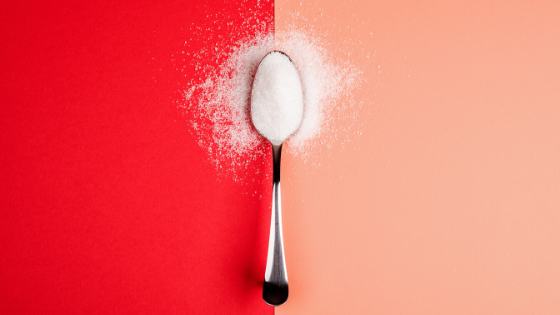
Adults should have no more than 30g of free sugars a day, (roughly equivalent to 7 sugar cubes). Children aged 7 to 10 should have no more than 24g of free sugars a day (6 sugar cubes). Children aged 4 to 6 should have no more than 19g of free sugars a day (5 sugar cubes).

Find out more about sugar…

5 Essential Tips For Keeping Your Children’s Teeth Healthy

1) Make brushing as fun as possible. Little things can mean a lot to little ones. Letting them choose their own toothbrush will help them engage more with cleaning their teeth. You could clean your teeth at the same time and show them how fun it can be making lots of foam.

2) Get digital! Again this is all about making toothbrushing more fun. There are many fun apps and songs you can enlist the help of. There are also electric toothbrushes which you can link to your phone! We wrote another great blog on how technology can help improve your kid’s toothbrushing. You can have a read here…

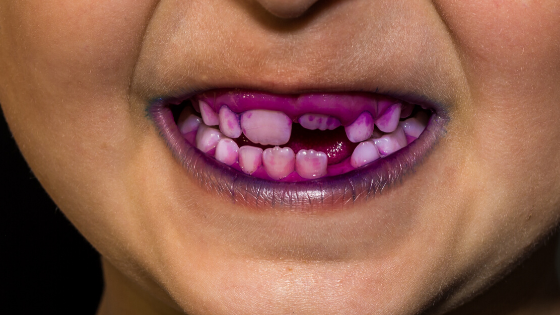
3) Inspect their cleaning. Get them involved with inspecting the results of cleaning. You should inspect their teeth every time after you brush. Look in a mirror with them and see if you can spot any plaque or food. You can ask older children to run their tongue over their teeth to see if they can feel any areas they might have missed. Disclosing tablets are also a fun way to check how clean their teeth are.

4) Diet. Kids naturally have a sweet tooth and it’s fine for them to indulge in the occasional treat – but the keyword is occasional. Sweets should not be given daily. The frequency of the teeth being subjected to sugar is generally more important than the quantity when it comes to dental care. This is why it’s also a good idea for children to drink water throughout the day rather than juice.

5) Remember the basics. Brushing twice a day for two minutes with a fluoride toothpaste. This advice is the most simple but it’s also the most important. Regular toothbrushing helps to remove plaque build-up and fluoride toothpaste can help to strengthen and repair daily damage. And lets of course not forget about those regular dental check-ups! 

Find out more about children’s dental care…

DIY Dentistry Disasters! Pulling out your own teeth…

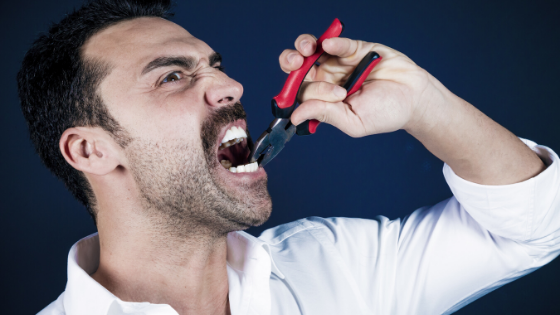
We are putting together a series of articles looking at the most common DIY dental treatments from DIY tooth whitening to DIY extractions. We have already looked at the most common DIY treatment – teeth whitening, and this week we are taking a closer look at another DIY dental treatment that is sadly on the rise during this pandemic – DIY tooth extractions (pulling your own tooth out).

DIY Tooth Extractions

The phrase ‘like pulling teeth’ usually describes something that’s difficult to do, requires a lot of effort, is tedious, tiring or unpleasant. Taking one’s own teeth out is not only those things but could also cause you significant medical problems or make the pain worse.

When a tooth is causing you pain or discomfort people often jest ‘oh just take it out’. When we are suffering pain, we want immediate relief and don’t consider the longer-term implications. Losing teeth can create a domino effect of dental problems. Modern dentistry is now focused more on saving teeth with the goal of your teeth lasting a lifetime as it benefits your overall health.

There have been quite a few horror stories in the press over the past couple of months of people who have tried and suffered severely after trying to remove their tooth. Teeth are held in the jaw bone by fibrous ligaments; it’s akin to the tooth being glued into the bone. They are also surrounded by bone support. When a tooth is removed at a dental practice the dentist would take an x-ray prior to extraction so they can check in advance for any problems. They also have special tools and of course training and experience! Removing your own tooth can have severe consequences resulting in increased pain and heavy bleeding.

I know people who have taken their own teeth out with no problems?

You may have heard of someone taking their tooth out with relative ease. Almost always it will be because the person is sadly suffering from gum disease. Gum disease left untreated can weaken the tooth’s gum and bone support. In extreme cases where the patient hasn’t seen a dentist, the tooth can become very loose and either falls out or it can be removed easily.

Getting help and advice

If you’re in dental pain and are a patient of our Leicester dental practice – Smile Essential then you can call us for advice 0116 2891317 or email info@smileessential.co.uk 

How to place a temporary filling in your tooth…


Temporary Filling Placement At Home 

You will need:- 

A mirror
Good light source
Cotton wool pads, cotton handkerchief or flannel
Temporary filling material
A cotton bud 

 How to place a temporary filling in your tooth:-  

  1. Wash your hands with hot water and soap 
  2. Thoroughly brush your teeth with toothpaste, rinse your mouth with water and then use a mouth wash 
  3. Open the container with the temporary filling, select a rough size as per the area to temporary fill, roll the temporary filling into the size of a small ball, ensuring that this is big enough to cover all of the cavity 
  4. Swallow any excess saliva in your mouth (in order to help the temporary filling material stick we need to try to keep the cavity reasonably dry) 
  5. Using a clean cotton product like a cotton wool pad, cotton handkerchief or flannel –dry the tooth in question 
  6. Carefully place the temporary filling into the cavity 
  7. Gently push down and remove any excess temporary filling with a cotton bud 
  8. Gently bite your teeth together 
  9. Avoid eating or drinking or brushing for the next hour 

The following aftercare is recommended:-  

  • Avoid eating on the side with the temporary filling
  • Avoid eating hard or sticky foods 
  • Avoid any sugary food or drinks between meals 
  • Place a pea-size amount of fluoride toothpaste all over the tooth twice a day at a separate time to brushing your teeth 
  • Keep the area clean with your toothbrush

If you have any concerns at all please contact us via telephone 0116 2891317 or email info@smileessential.co.uk 

DIY Dentistry Disasters! Teeth Whitening…

Right now, DIY dentistry is on the rise. It’s very worrying for us dental professionals. Over the years, we’ve seen our share of disasters from super glued crowns to teeth that have disintegrated due to DIY tooth whitening. We are putting together a series of articles looking at the most common DIY dental treatments from DIY whitening to DIY extractions. This week we start with the most common DIY treatment – teeth whitening, and you’ll see why DIY dentistry is such a terrible idea.

DIY Teeth Whitening 

There are usually two ways we see people perform DIY teeth whitening 1) they use abrasive substances such as lemon juice and bicarb of soda and lemon juice or they use a whitening treatment bought online or from a beautician. Both of these can cause irreversible damage.

When it comes to tooth whitening, there are two important anatomical features to be aware of – the dentine and the enamel. The enamel is a thin surface structure, and the dentine is more yellow. Tooth enamel, while incredibly strong, can be worn down with acid. This is why if you place lemon and bicarb of soda on the teeth, it can be disastrous! The lemon (acid) weakens the enamel, and the bicarb of soda works as an abrasive. The damage this causes sadly is irreversible. 

The second most common DIY whitening is teeth whitening from a non-dentist, e.g. beautician or online. It is illegal for anyone other than a dental professional to provide teeth whitening in the UK as it is classed as a dental procedure and can cause serious problems. One of the most common side effects we see from this is severely burned gums. 

Why do I see before and afters of people with whiter looking teeth?

At best, these DIY treatments can dehydrate the teeth, which makes them appear whiter temporarily it can also lift some surface staining. At worst the procedure may be completely stripping the teeth. A tell-tale sign of this is teeth that are becoming more transparent and sensitive.

The long term effects of this type of treatment can require significant restoration, which can be time and costly. This may include:

  • root canal treatment
  • fillings
  • veneers or crowns
  • in some cases the removal of teeth

If you’re desperate for whiter teeth, than these are your best options:

  • Dental hygiene appointment – this can remove plaque and staining that causes discolouration
  • Professional dental whitening – a safe and effective option for lightening your teeth by several shades or more
  • Home care – using an electric toothbrush such as Philips Sonicare and avoiding stain-causing foods such as tea, coffee, and red wine can help your teeth to stay whiter.

When considering DIY dentistry, it’s crucial to remember two key things 1) unfortunately, teeth cannot repair themselves, any damage that occurs is likely to require professional dental treatment. 2) teeth aren’t just there for aesthetics they also play a vital role in helping you to eat, speak and support your face. The way your teeth look should ultimately come after these three essential roles. 

Find out more about our professional teeth whitening…

Floss like a boss…

More than a quarter of patients admitted to lying to their dentist about our flossing habits. A study from the British Dental Health Foundation also revealed that one in three Brits admitted that they have never flossed their teeth!

Our Leicester dentists recommend that you floss at least once daily. Flossing removes food and plaque from between the teeth – an area that your toothbrush cannot reach! Your teeth have five surfaces, and toothbrushing only cleans 3 of them.  

It is essential to clean between the teeth because plaque buildup can lead to gum disease and tooth decay. Daily flossing is imperative if you want to keep your teeth for the rest of your life.

Most people find flossing simple and quick once they get the hang of it. However, it is crucial to ensure you are flossing correctly. 

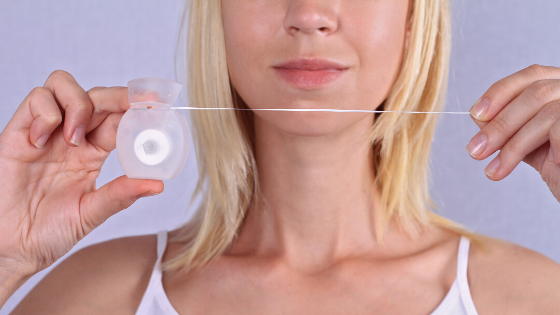
Here is our step by step guide for correct flossing:

1) Start with about half a metre of floss or dental tape

2 Wind most of the floss around each middle finger, leaving about 3-4cm to work with.

3. Holding the floss tautly between your thumbs and index fingers, slide it gently through the teeth, curve the floss around the base of each tooth making a C shape, making sure you go beneath the gum line. But never force the floss, as this may cut or bruise delicate gum tissue.

4. After each tooth roll the dirty floss on to the finger and move on to the next tooth using a clean section of floss. 

5. Continue to do this as you move from tooth to tooth until you have done all of the teeth. 

It is quite likely that your gums may bleed during the early stages of flossing. Do not let this put you off! Bleeding gums is a sign that you should most definitely be flossing. Any bleeding should resolve after 3-4 days.

If flossing is too tricky for you; for instance, you have a medical condition such as Parkinson’s or arthritis, there are alternatives.

Thankfully there are many alternatives to flossing nowadays. Floss sticks can be a great alternative to floss if your fingers are a little too big to fit inside your mouth or you find the floss a bit fiddly. It is a piece of floss attached to a plastic handle.

A popular alternative and one which our dentists at Smile Essential Dental Practice often recommend are Tepe brushes. These are a type of interdental cleaning brush. People often find them much easier to use. They come in a range of sizes, so it’s vital to get a recommendation from your dentist.

If you have any questions about cleaning or are unsure if you should floss or maybe use something else, then speak to your dentist at your next dental health check. We’re here to help.

5 tips for your cleanest teeth at home ever!

We all love that dental feeling of clean, that fresh breath feeling that we get after a good professional clean! Having a clean mouth doesn’t just feel good, but it’s also hugely beneficial to your overall health.

Right now, non-urgent dental treatment is not permitted; however, you can get a head start and get your best feeling of clean at home with some top tips from our Leicester dentists.

1) Clean between the teeth. Your teeth have five surfaces brushing cleans just three of them!  So your mouth can never truly feel clean when you are missing so much. You can clean in between your teeth by using dental floss or using interdental brushes such as Tepes. You may be surprised by how much food and plaque you discover. If you’re new to cleaning between your teeth or haven’t done so for a while, then don’t be too alarmed if there is some bleeding. The bleeding has been caused by inflammation from the gums being irritated by plaque or food debris. Much like a spot turns red and irritated. Once the cause has been removed, then the gums and bleeding will settle over the next 24-48 hours.

2) Change your toothbrush every two to three months or sooner if it becomes worn. An electric toothbrush is an excellent investment. The Philips Sonicare toothbrush is our favourite. The Sonicare electric toothbrush uses ultrasonic technology which offers a superior clean. As an added bonus it can also help with stain removal!

3) Take a look at your tongue! Your tongue can be a source of bad breath and may be coated in sticky plaque. The best way to remove this is with a metal tongue scraper every time you brush your teeth. But a toothbrush can also be used to help remove any buildup. Cleaning your tongue will help to reduce the number of bacteria in your mouth and help it to feel much fresher.

4) Watch what you’re eating and drinking. Have you ever noticed that your mouth can feel horrible after eating certain foods? Sugary foods, in particular, can leave your mouth feeling gross. This doesn’t happen when eating or drinking something much healthier.

5) Quit smoking. Stopping smoking has never been more important! Smoking can cause staining, gum disease, tooth loss, and in more severe cases mouth cancer.

If you have any questions about cleaning your teeth at home feel free to reach out to us on our Facebook page

Wisdom tooth pain relief advice…

Once upon a time, having wisdom teeth was extremely useful. But, as we’ve evolved, our need for these extra pearlies has diminished. For most people, wisdom teeth come through and don’t cause any problems. But what about if they do become painful? We’ve written this helpful guide to help you avoid wisdom teeth problems and manage if they do cause pain.

Wisdom tooth pain

Sometimes there can be mild discomfort as wisdom teeth come through, but this is only temporary and will disappear once the tooth is fully in position. 

We often hear patients say that they have had some discomfort, then it went away then it came back. Wisdom teeth often come through in spurts – much like a growth spurt. Erupting a little more each time and often stopping for a few weeks or even several months. 

One of the most common causes of wisdom tooth pain isn’t actually from the tooth but from food and plaque getting trapped.

Because wisdom teeth are tucked away in the back of the mouth, you have to be extra thorough in your brushing as it’s easy to miss certain spots.

There can also be a lip of gum over part of the tooth which hasn’t disappeared yet. This allows food and plaque to get trapped and if left there can cause at best a bad taste and bad breath and at worse pain, swelling and limited mouth opening.

If your wisdom teeth start to become painful, then try this:

1) Don’t avoid cleaning the area even if painful. Clean gently and thoroughly to help remove the food and plaque particles. The best way to do this is by using a small-headed toothbrush and not opening too wide. When you only open halfway, you have more manoeuvre more easily then if you were to stretch open as wide as possible.

2) Warm salt mouthwashes. This traditional remedy often surprises people. However, it’s an effective way to help relief wisdom teeth pain. Use a small teaspoon of salt dissolved on some water as warm as you have a cup of tea and swill around the wisdom tooth area for up to a minute. You can repeat this three times a day until better.

3) Take suitable pain relief. If the pain becomes too much, then pain relief medications such as paracetamol can help. You must continue with steps 1 and 2 in addition to taking pain relief. A pharmacist or medical practitioner can advise you on the best pain relief to take for you.

When to seek emergency dental treatment:

  • If the pain doesn’t go away after a few days despite following the steps above.
  • The pain keeps on getting worse
  • You have a facial swelling 
  • Restricted mouth opening – you can only open a little bit.
  • You are concerned that something is wrong.

Will I need to have the wisdom teeth taken out?

If the wisdom tooth is likely to cause you pain or problems, then your dentist will discuss your options for having the tooth removed. But, if there is enough space for the tooth and they are unlikely to cause you ongoing problems, then it’s now advisable to leave the tooth there. 


7 ways to protect your kids teeth whilst staying at home…

1) Keep your basic routine

Right now, it’s easy to let routines slip. We appreciate it’s like groundhog day. However, keeping to a routine will not only help you to keep your sanity, but it will also help to keep the kids in the routine of cleaning their teeth.

2) Don’t let them snack all-day

Boredom can often result in snacking. Unfortunately snacking puts the teeth under constant attack and increases the chances of tooth decay. 

3) Hit refresh

It’s been incredible to see how well kids are now washing their hands. Why not use this extra time to help teach them on improving their toothbrushing too? When you next go to the shops pick up some new toothbrushes to help signify that your refreshing your routine and freshening up their brushing routine.

4) Don’t reward with sweets

The days are so long staying at home! We’re all surviving the best we can. Most parents are guilty of sugar-coated bribe! But try and reward with non-sugar alternatives. 

5) Look for healthy swaps

The NHS has a wonderful website about keeping children fit, active and healthy. It has some fantastic recipes that are pretty simple and some ideas for sugar swaps that can help reduce the amount of sugar your child consumes. Take a look: https://www.nhs.uk/change4life 

6) Embrace technology

There are loads of ways that technology can help to improve your child’s brushing, and it’s getting better all the time! From YouTube videos for littles ones to apps that link your toothbrush to a phone app.

We dedicated a whole blog to this topic- ‘Brushing your kid’s teeth and how technology can help…’

7) Watch what they drink

Ideally, children (and adults!) should only be drinking water between meals and save sugar-containing drinks for mealtimes. If your child is used to drinking juice between meals, then be sure to choose no added sugar cordial. 

Keeping up with your dental care at home…

Staying as healthy as possible has moved to the top of the list for all of us right now. Did you know that your oral health has a connection with your overall health?

But with more and more of us staying at home it can be easy to fall into bad habits and let regular routines slip. However, now could be the perfect time to refresh your routine! Here are our top tips for ensuring you maintain a healthy mouth.

• This is always on the top of the list for a reason! Ensure you’re cleaning twice a day with a fluoride toothpaste. The fluoride in the toothpaste helps to repair and strengthen the teeth.

• Change your toothbrush every two to three months or sooner if the bristles are splayed or worn. Toothbrushes aren’t as effective when worn down, and they also harbour an increasing amount of bacteria. 

• Clean in between your teeth. Toothbrushing only cleans three of the five surfaces of your teeth. Your breath will never be fresh or your teeth clean if you don’t clean in between them. The other two tooth surfaces can be cleaned by either flossing or using interdental brushes. You’ll be surprised at just how much food and plaque you will find hidden there!

• Avoid getting into the bad habit of snacking! Snacking throughout the day means your teeth are under attack and you stand a good chance of developing tooth decay.

• Brushing your teeth last thing at night with fluoride toothpaste helps to protect them. During the night, your mouth becomes dry and is more susceptible to problems.

• Stick to drinking water or herbal teas between meals.

Still want to improve your oral health further! Then you’ll enjoy reading our 3 quick switches to improve your dental routine…