Frequently Asked Questions

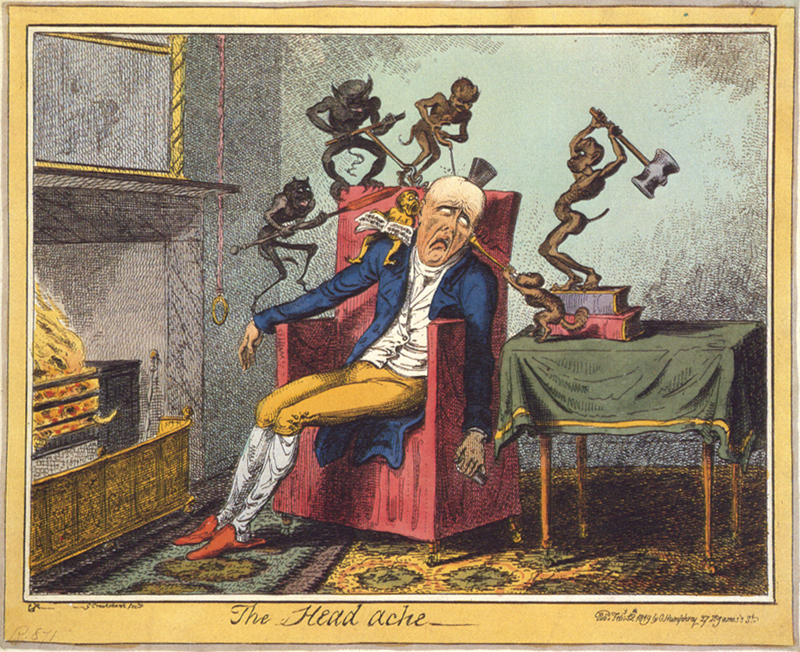
Have you awoken this morning with a headache?

Cruikshank_-_The_Head_Ache

Did you know that 40% of all “Healthy” individuals suffer from headaches, facial and neck pain. Headache sufferers can be any age, from teens to seniors. The largest group of sufferers is women.

When individuals experience headaches, facial and neck pain, dentists generally aren’t the first professionals people think about. Headaches are a big problem for many people. Many treatments and medications are available for headaches too, just look at all the ads on TV.

But to treat a headache effectively it is best to know the cause of the headache in the first place. There are dental causes for headaches too. The types of headache dentists can help with are muscle strain or tension headaches, commonly felt in the morning, possibly with neck and jaw pain. This pain is caused by intense contractions of muscles around your jaws. These muscles even extend way up on both sides of your head (called the Temporalis muscles). Many people exhibit involuntary clenching and grinding of their teeth at night that can overload these muscles. This is a reflex action – feedback from the teeth causes even more clenching and pain. Dentists have traditionally fabricated a “nightguard”- an appliance that covers all the teeth on the upper or lower arch (similar to a sports mouthguard). It has a flat biting surface that lets the teeth slide so there is no grinding damage to teeth. But this will not stop the positive feedback cycle, the teeth can sense the jaws clenching, causing more clenching – a reflex remember?

So there is another type of appliance I have used successfully for pain relief called a ‘B Splint’. In short, it’s a nightguard that fits over either the upper or lower but the back teeth don’t touch and there is much reduced chewing muscle action. So these muscles are more relaxed and won’t be painful. And so the ‘B Splint’ may help eliminate the need for pain medication and solve your headache problem.

If you suffer frequently from headaches, facial or neck pain then be sure to mention it to your dentist at your next check up, alternatively get in touch to book a free mini consultation.

Tel- 0116 2891317   Email- info@smileessential.co.uk
The BDA Good Practice Scheme – What does it mean for you?

Smile Essential is a founder member of the British Dental Association (BDA) Good Practice Scheme and has recently been awarded Gold Membership. We are honoured to be within an elite group of 200 practices nationwide to achieve Gold Membership. Our commitment to excellent patient care and compliant practice management has been audited and approved by the BDA.

Shrik Kotecha has worked as a dentist at the practice for almost 10 years and has seen the practice evolve and grow to ensure that on top of the national regulations and protocols that are expected to be followed by all Healthcare Dental Professionals – including the CQC Guidelines – Smile Essential always goes the extra mile by following the BDA’s Good Scheme Code of Practice.

One question that his Leicester dental patients often ask him when they come to see him at Smile Essential is ‘what does it mean for me?’ A very valid question which Shrik thought would be useful to include in our regular blogs.

Good Practice Scheme members are committed to supporting patients towards achieving and maintaining good oral health. Achieving the best possible outcomes for patients depends upon the skills and professionalism of the whole dental team. Here is a statement that sums up what Good Practice Scheme membership stands for:

1. We will work with you to provide care that meets your needs and wishes. We will explain what we are proposing to do and tell you about any significant risks. We will explain options and cost so that you can make an informed choice about your care and we keep all information about you confidential

2. We look after your general health and safety whilst you are receiving dental care by undertaking risk assessments and managing any potential hazards at our premises. Infection control and cleanliness is also essential for safety and we follow current guidelines on preventing cross infection

3. All our staff are given training in practice procedures, staff members responsibilities are clear and staff take part in continuing professional education to keep their skills and knowledge up to date

4. Our practice working methods are reviewed regularly and we ask patients for their views on our service in order to identify any opportunities for improvement.


Goodpractice-Gold ribbon 2013

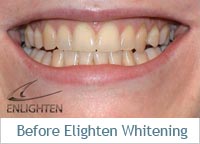
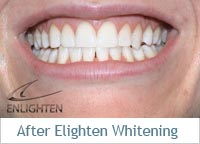
Have you been Enlightened? Its as easy as one, two, three!

We have been offering Enlighten at Smile Essential for a few years now and earlier on this year we decided to only offer Enlighten for tooth whitening. Why did we do this? To put it simply Enlighten offers results that aren’t even comparible to other tooth whitening solutions, all of our patients have been delighted with the results and the ease of the treatment. Whats more here at Smile Essential we actually guarantee you will acheive the B1 shade, that is the lightest on our tooth shade chart.

Commonly asked questions are-

My teeth are really dark will it work for me?
Yes at Smile Essential we guarantee you will achieve the B1 shade no matter what colour your teeth were to start with.

Will my teeth be sensitive?
With some tooth whitening systems transient sensitivity can be a huge problem. However with the Enlighten system Smile Essential patients rarely report sensitivity problems that haven’t been resolved with the specially designed sensitive tooth serum contained as part of your package.

How long will the whitening last?
The results will last indefinitely as long as you look after your tooth whitening trays and carry out a top up one night every couple of months.

Do I have to be a Patient of Smile Essential?
No we carry out free tooth whitening consultations for everyone. Smile Essential has acheived the Gold standard from the British Bleaching Dental Society and we are the only Practice in Leicester to have been awarded this, so your in safe hands having your teeth whitened with us.

The process is very simple and generally takes 3 appointments. The first appointment is for a free consultation to check that your suitable and what your tooth whitening goals are, if you are happy we can take the impressions at this stage to make your uniquely designed tooth whitening trays. The second appointment is when the uniquely designed tooth whitening trays are fitted and then you start to whiten your teeth from home each evening for the next 2 weeks. Then on the final appointment at Smile Essential we complete in-surgery laser tooth whitening whilst you can relax and watch a DVD and then we will reveal your new Enlightened Smile. As easy as one, two, three!

You can get in touch with one of the friendly team at Smile Essential tel-0116 2891317 email- info@smileessential.co.uk to book in for your free consultation or answer any further question you may have on gaining an Enlightened Smile.

Five ways to improve your smile: Tips from Smile Essential Dental Team

1) Book regular appointments with your dentist – You’ll be surprised how many people in Leicester do not have regular dental check ups.

2) Dental Hygiene – Brushing your teeth twice a day using mouthwash and floss and booking in to see the dentist will help maintain your sparkling smile.

3) Quit smoking – Asides from the health benefits and financial benefits, quitting smoking can do wonders for your smile.

4) Cosmetic Dentistry – There are many different cosmetic dental treatments on offer to increase your confidence and to correct many dental problems. Give us a call and come and see us, and we’re sure that we can help.

5) Improve your Diet – Many foods can stain and damage your teeth such as coffee, tea, fizzy drinks and red wine. Cutting these out of your diet isn’t necessary. By reducing how much you consume, will increase your dental health and keep your smile whiter, brighter and beautiful.

If you would like any further information then please give us a call on 0116 2891317.

Smile Essential Dental Practice

Creating Confidence

What should you know about gum disease?

Gum disease is a bacterial infection that destroys the attachment fibres and supporting bone that hold your teeth in your mouth.  Left untreated this disease can lead to tooth loss.  The first signs of gum disease are reddened, swollen or bleeding gums caused by the build up of plaque and known as ‘gingivitis’.  This can be easily prevented by good oral hygiene at home and with the assistance of your dental hygienist. 

Are you at risk?

Some people are genetically predisposed to gum disease so it’s a good idea to check if either of your parents lost teeth as a result of gum disease.

 Smoking can hide the signs of gum disease as well as reduce the positive effects of any treatment. Not to mention all the other harmful effects not related to your gums!

 Stress has been shown to reduce resistance to gum disease meaning people can be susceptible at different times in their lives depending on their lifestyle.

However, regardless of your susceptibility, you and your dentist can keep gum disease in check with good oral hygiene at home combined with regular check ups and the appropriate treatment where necessary.

To book a consultation give one of our friendly team a call on 0116 2891317 or alternatively email info@smileessential.co.uk

Tooth decay doesn’t mean the end

Many people may conjure up horrible images when they hear the words root canal, especially if they have a phobia of going to the dentist, but root canal treatment is a very safe procedure that can save a tooth. Root canal treatment is used to treat teeth that are severely decayed or damaged as a result of an accident or injury.

The root canal procedure involves removing decayed pulp tissue from the tooth; the pulp contains all the living tissue in the tooth, including the nerves and blood vessels and if the pulp becomes severely decayed, the tooth effectively dies. Root canal treatment removes all the decayed tissue and cleans the tooth so that a new crown can be placed over the tooth, creating a natural looking tooth that functions in exactly the same way as an original tooth.

If a tooth is severely decayed or damaged and it is left untreated, there is a risk of an abscess developing and the bone surrounding the affected tooth may become damaged; the condition of the tooth can quickly disintegrate and it may have to be extracted, which will create a gap in the teeth. Gaps not only affect the aesthetic of the smile but they also have an effect on the individual’s ability to eat and speak clearly.

Root canal treatment may be a daunting prospect for people who are worried about injections, pain or generally going to the dentist; however, the procedure is carried out under anaesthetic and many dentists now offer specialist services for patients with dental phobia. In the vast majority of cases the rewards of the procedure far outweigh the risks and the treatment can prevent the tooth from being lost. Root canal treatment is usually carried out over two appointments.

What to do following a dental extraction

The following steps will help prevent bleeding and relieve soreness after a dental extraction

 ON THE DAY OF TREATMENT

  • Rest for a few hours, but you do not have to lie down.
  • Strenuous exercise is best avoided for a few hours.
  • Do not vigorously rinse the mouth for at least 24 hours.
  • Avoid HOT fluids, alcohol, hard or chewy foods.  Choose cool drinks and minced or soft foods.
  • Should the wound start to bleed, apply a small compress. This can be made from some cotton wool in a clean handkerchief.  Place this on the bleeding point and bite firmly on it for 5-10 minutes, longer if necessary.
  • Any pain or soreness can be relieved by taking pain killers advised by your Dentist.
  • If prolonged bleeding or pain occurs, contact your Dentist.
  • Smoking is best avoided for 24 hours following treatment.

 ON THE DAY FOLLOWING TREATMENT

  • It may be beneficial to use an antiseptic rinse or a warm salt water rinse to bathe the wound.  This may be carried out after each meal until healing is complete.  A salt water rinse is made by dissolving a level teaspoon of salt in a glass of warm water.  The solution should be held in the mouth for two to three minutes to bathe the wound and then discarded.
  • Continuing mild pain can be treated by taking pain killers, but not containing any aspirin

 IF IN ANY DOUBT-CALL THE PRACTICE ON 0116 2891317

Protect you teeth with toothbrushing says Leicester dentist

Brushing your teeth is by far and away the most important way of keeping them clean, healthy and free from decay. Effective brushing is the first line of defence against a whole series of nasty and unpleasant dental health concerns that could cause you a lot of pain, embarrassment and expense throughout your life.

Leicester dentists recommend that you brush your teeth at least twice a day for three minutes. It is recommended to use a soft-bristled brush, unless told otherwise by your dentist for specific reasons, as they are the best at removing plaque and ultimately that is the number one aim of tooth brushing. Plaque is the sticky, filmy substance that coast teeth and releases acids which eventually break down enamel and cause cavities. If left untreated, dental cavities will worsen until the enamel is breached and the sensitive inner part of the tooth including the dental nerve is exposed to bacteria and infection. This can be very unpleasant and the source of severe pain and ultimately tooth loss.

When brushing it is important to angle the brush at 45 degrees to the gums so that they are also gently cleaned. This helps to keep plaque off the gums and prevent gum disease, the number one cause of tooth loss in the UK. Using a small-headed toothbrush is also recommended because it allows easier access to more parts of the mouth.

Although brushing is very important, it is also still a good idea to floss your teeth at least once a day as this helps to remove plaque and food debris from between the teeth. As well as this, it is also highly important to make sure you keep up six-monthly appointments with the dentist as even the most rigorous brushers can still be affected by decay and disease.

Brushing and Flossing Techniques

It is very important to invest in a good toothbrush to help maintain effective brushing and prevent gum disease. There are so many toothbrushes on the market, it can be difficult to know what to buy. We recommend a Philips Sonicare rechargeable electric toothbrush as being one of the best toothbrushes on the market.

There are 5 simple steps that you can use for effective brushing.

1. Always look in a mirror whilst brushing. It sounds so simple but many people do not use a mirror and hence cannot see where they are brushing and so miss cleaning certain areas.

2. Use a methodical approach, concentrating on one tooth at a time.

3. Make sure that you brush the outside, inside and biting surfaces of the teeth.

4. Try to begin brushing in a different place everyday to ensure that you do not neglect any particular area.

5. Toothbrushing should last for at least two minutes (A good tip is, if you listen to the radio in the morning you should brush for the duration of 1-2 songs).

Flossing techniques

Some people say that they spend a long time brushing their teeth and therefore they do not need to floss, this is not the case. Although the bristles of a tooth brush are fine, collectively they are still to thick to get in-between the teeth effectively. It is very easy to forget that teeth have more than two surfaces and they all need the same care and attention, especially as food can get trapped in-between teeth and if left it can cause decay/ carries/cavities. The only way to remove this is by flossing.

1. Take about 45-50cm (18inches) of floss and wind the ends around your middle fingers, leaving a short distance between them.

2. Using your thumb and first finger, gently move the floss between your teeth and wrap in a C shape around the tooth.

3. Guide the floss to where the tooth meets the gum, but take care not to damage the gum by flossing too vigorously

4. Then move the floss up and down the tooth. During use the floss spreads out for more effective plaque removal.

Interdental (Tepe) Brushes

Interdental (Tepe) brushes are small pocket sized brushes that are available to buy in different sizes. A dentist would recommend what size is best for the patient, and some people are advised to use two different sized brushes corresponding to the size of the gaps between teeth.

For the ultimate feeling of a fresh mouth, don’t forget to use a tongue scraper as your tongue harbors many bacteria that can cause bad breath.

Should you need any further advice on brushing and flossing techniques, speak to one of our team members who will be happy to help you.

They say water is good for you but do your teeth think so?

Of course they do, unless however your water has bubbles in it. Drinking sparkling mineral water is the same as drinking other non-sugar or diet fizzy drinks. While these drinks do not contain sugar they are acidic and can lead to acid erosion of the tooth surface which in turn can lead to sensitive teeth and excessive tooth surface loss.

If you can’t make the bubbles a complete thing of the past then…

  • Drink them through a straw- the acid has less chance to attack the teeth
  • Only have fizzy drinks occasionally- children especially should have not have fizzy drinks regularly
  • Wait at least half an hour before brushing, to give your teeth a change to break down the acid.

 If your teeth are sensitive you should…

  •  Tell your dentist! Acid erosion is not the only cause of sensitivity.
  • Limit your intake of acidic drinks and food such as red wine, fizzy drinks, citrus fruits and fruit juices
  • Use a desensitising toothpaste to brush your teeth

The dentists at Smile Essential advice that drinking plain (still) water is best!